
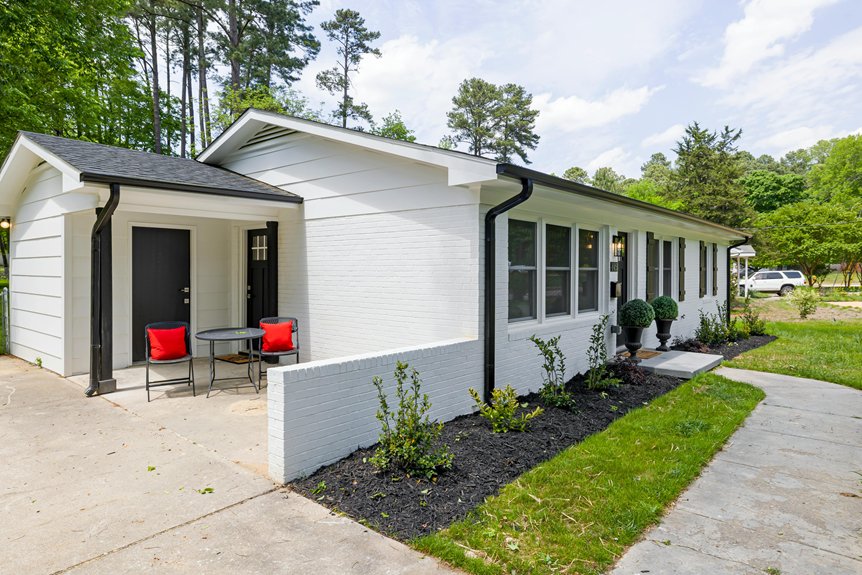
To prevent cracks in your concrete driveway and patio, guarantee proper drainage and soil stabilization to reduce water-related stress and settlement. Use a high-quality, low water-to-cement ratio mix and incorporate reinforcement such as steel rebar or fiber mesh to control cracking. Regular maintenance, like sealing surfaces and repairing small cracks promptly, further enhances durability. Following these precise strategies can considerably extend your concrete’s lifespan, and understanding additional techniques will help keep your surfaces in top condition.
How Do Cracks Form in Concrete Driveways and Patios?
Cracks in concrete driveways and patios typically form when the material experiences stresses that exceed its tensile strength. These stresses often result from temperature fluctuations causing expansion and contraction.
Without proper concrete sealing, moisture infiltrates, weakening the surface and increasing crack susceptibility.
Expansion joints are essential; they allow controlled movement and reduce internal stress. Over time, neglecting these joints leads to stress buildup, making cracks more likely.
Proper installation of expansion joints and regular concrete sealing work together to mitigate stress-induced cracking, maintaining structural integrity and appearance.
Recognizing the role of these features helps prevent cracking before it begins, especially when combined with quality craftsmanship and sustainable practices.
The Importance of Proper Drainage and Soil Preparation
Proper drainage and soil preparation are critical to the longevity of your concrete driveway and patio. Proper drainage guarantees water flows away from the surface, reducing hydrostatic pressure that can cause cracking.
Well-prepared soil provides a stable foundation, minimizing settlement and uneven stress distribution. Incorporating landscaping aesthetics involves grading that complements drainage efficiency, while soil compaction prevents shifts that compromise structural integrity.
Additionally, proper drainage reduces excess moisture, aiding pest control by deterring insect infiltration and mold growth. Neglecting these steps increases the risk of cracks, degradation, and maintenance costs, ultimately shortening the lifespan of your concrete surfaces and compromising your landscape’s visual appeal.
Choosing the Right Concrete Mix and Reinforcement Methods
Selecting the appropriate concrete mix and reinforcement methods is essential for guaranteeing durability and crack resistance in your driveway and patio.
Opt for a high-performance mix with low water-to-cement ratio to minimize shrinkage. Incorporate reinforcement such as steel rebar or fiber mesh to control cracking.
Consider color customization options to enhance aesthetic appeal without compromising structural integrity.
Surface finishing techniques, like broom or trowel finishes, influence crack resistance by reducing surface tensile stresses.
Precise mix design and proper reinforcement optimize strength, while surface finishing ensures a smooth, durable surface that resists cracking over time.
Regular Maintenance Practices to Prevent Cracks
Regular maintenance practices are vital for extending the lifespan of your driveway and patio and preventing the development of cracks. Implementing sealing techniques, such as applying waterproof sealants, helps protect the surface from moisture infiltration that can cause freeze-thaw damage.
Regular surface treatments, including cleaning and sealing, reduce surface erosion and minimize crack initiation points. Use appropriate sealants periodically based on exposure and wear.
Monitoring for early signs of surface deterioration allows timely intervention, preventing small cracks from expanding.
Consistent maintenance ensures the concrete remains durable and resilient, substantially decreasing the risk of structural failure over time.
When to Repair or Replace Cracked Concrete to Avoid Further Damage
Recognizing the appropriate time to repair or replace cracked concrete is essential for preventing further structural damage.
If cracks are shallow (less than ¼ inch wide) and show no signs of displacement, timely sealant application can prevent water infiltration and slow deterioration.
However, if cracks expand or exhibit significant displacement, replacement is necessary.
Temperature effects influence repair timing; extreme cold or heat can compromise sealant adhesion and concrete integrity.
Repair during moderate temperatures ensures proper curing and adhesion.
Delaying repairs in such conditions risks accelerated deterioration, making prompt assessment and intervention critical to maintaining structural stability.
Conclusion
Preventing cracks in your concrete driveway and patio involves understanding how they form and applying proper techniques. Ensure proper drainage, maintain soil stability, and choose appropriate concrete mixes with reinforcement. Regular inspections and maintenance allow you to spot early signs of damage, enabling timely repairs that prevent further deterioration. If cracks become extensive, professional assessment may be necessary to explore replacement options. Consistently following these practices helps maintain the structural integrity and durability of your surfaces for years to come. To learn more, contact Providence Concrete by calling us today at (615) 956-9461 or visit us online at Providence Concrete.