
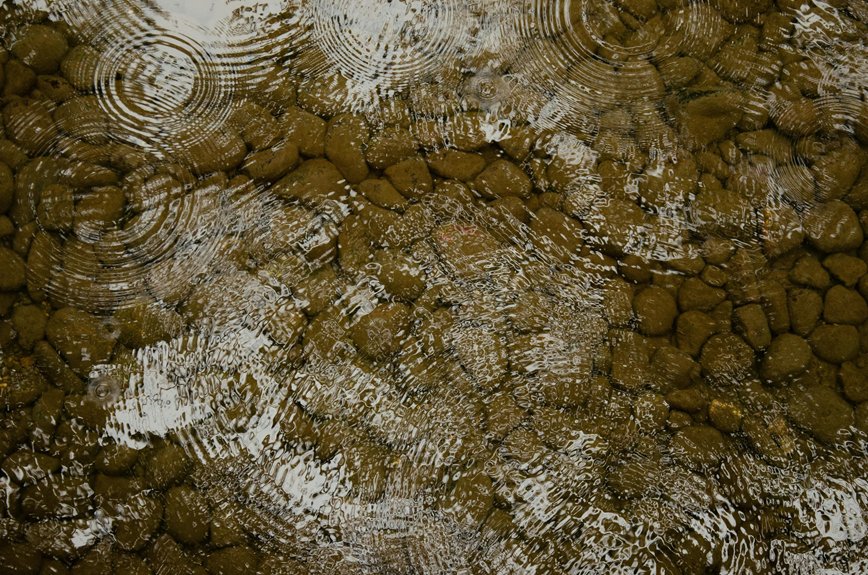
Sediment buildup in White Rock Lake clouds the water, reducing clarity and harming aquatic life. When sediments like silt, clay, and organic matter enter the lake, they suspend in the water, blocking sunlight and disrupting habitats. This can lead to algae blooms and decreased water quality. Monitoring sediment levels helps manage these issues effectively. If you want to learn more about how sediment impacts the lake and what can be done, keep exploring.
Why Sediment Buildup Is a Concern for White Rock Lake
Sediment buildup poses a significant threat to White Rock Lake’s water quality because it can smother aquatic habitats and reduce water clarity. Sediment pollution enters the lake through runoff, carrying particles that cloud the water and hinder sunlight penetration.
This impacts water filtration processes, making it harder for natural systems to keep water clean. When sediments accumulate, they clog filters and disrupt the balance of aquatic ecosystems.
Reduced water clarity isn’t just an aesthetic issue; it indicates declining water quality and can harm fish and plant life. If sediment buildup continues unchecked, it can lead to increased algae growth and decreased oxygen levels, further degrading the lake’s health.
Managing sediment pollution is essential to maintaining clear, healthy water in White Rock Lake.
What Types of Sediment Are Found in the Lake
Understanding the types of sediment present in White Rock Lake helps reveal the sources of water cloudiness and ecological challenges. The sediment composition varies, including fine silts, clay particles, organic matter, and larger debris like sand and gravel.
Silts and clay are lightweight and easily suspend in water, causing cloudiness. Organic matter, such as decayed plant material, can promote algae growth and reduce water quality.
Sediment sources include runoff from nearby urban areas, eroded soil from construction sites, and natural deposits. These different sediment types impact water clarity differently, with finer particles remaining suspended longer.
Recognizing the sediment composition and sources allows you to better understand how sediment affects water quality and what strategies might reduce sediment inflow into the lake. Proper management of sediment involves addressing both natural and urban runoff sources to improve clarity.
How Sediment Accumulates Over Time
Over time, sediments settle and gradually build up at the bottom of White Rock Lake, altering its depth and clarity. As sediment layers accumulate, they create a natural filtration system that traps particles and pollutants.
This layering process occurs constantly, with new sediments settling on top of older ones, gradually increasing the lake’s sediment depth. Sediment layering is influenced by runoff, erosion, and other environmental factors, which bring in different types of particles over years.
This natural filtration helps improve water quality by filtering out contaminants before they reach the surface. However, excessive sediment buildup can reduce water clarity and affect the lake’s health.
Understanding how sediment accumulates over time highlights the importance of managing runoff and erosion to preserve White Rock Lake’s clarity.
How Sediment Affects Water Clarity and Lake Ecosystems
As sediments settle in White Rock Lake, they can considerably influence water clarity and the health of the surrounding ecosystems. Sediment chemistry plays a key role, affecting nutrient levels and potentially introducing pollutants that harm aquatic habitats.
When sediments are rich in organic material or chemicals, they can promote algal blooms, which reduce water transparency and disrupt the balance of aquatic life. Sediments also smother habitats like spawning grounds and underwater plants, making it harder for fish and other species to thrive.
Clear water supports healthy aquatic habitats and biodiversity, but excessive sedimentation clouds the water, blocks sunlight, and diminishes the lake’s ecological vitality. Managing sediment input is essential for maintaining water clarity and sustaining the lake’s ecosystem health.
How We Measure Sediment and Water Clarity
To assess sediment levels and water clarity in White Rock Lake, scientists use a combination of specialized tools and methods.
Sediment sampling involves collecting water and sediment samples from different lake areas to analyze sediment concentration and composition. These samples help determine how much sediment is suspended in the water, which directly impacts water transparency.
To measure water transparency, scientists often use a Secchi disk—a simple, circular disk lowered into the water until it’s no longer visible. The depth at which the disk disappears indicates water clarity.
Combining sediment sampling results with Secchi disk readings provides a clear picture of how sediment affects water clarity in the lake, helping guide management efforts to improve overall water quality.
Effective Strategies to Reduce Sediment in White Rock Lake
Reducing sediment levels in White Rock Lake requires targeted actions that address the sources of erosion and runoff. Effective sediment management involves implementing erosion control measures like planting vegetation along shorelines and installing silt fences to trap sediment before it enters the water.
Additionally, managing stormwater runoff by creating rain gardens, permeable pavements, and retention basins can considerably cut sediment inflow.
Community engagement plays a crucial role in these efforts; encouraging residents to participate in shoreline stabilization projects and adopt best practices for land use helps reduce erosion.
Educating the community about the importance of sediment management fosters collective responsibility, ensuring sustained improvements.
When everyone works together, these strategies can effectively lower sediment levels, improving water clarity and the health of White Rock Lake.
What You Can Do to Help Keep the Lake Clear
You can make a real difference in keeping White Rock Lake clear by taking simple, proactive steps. When enjoying recreational activities like boating, fishing, or picnicking, avoid disturbing the shoreline or stirring up sediment.
Properly dispose of trash and avoid using fertilizers or pesticides nearby, which can wash into the lake.
Support responsible urban development by advocating for green infrastructure, such as rain gardens and permeable pavements, which reduce runoff and sediment flow.
Educate others about the impact of urban development on water quality and encourage community efforts to reduce erosion.
Future Plans for Sediment Control and Lake Restoration
Efforts to improve sediment control and restore White Rock Lake are gaining momentum through a combination of innovative techniques and community involvement.
One key strategy is enhanced sediment filtration, which reduces sediment runoff before it enters the lake. This involves installing advanced filtration systems at critical points to trap particles effectively.
Additionally, the plan emphasizes community engagement, encouraging residents to participate in conservation efforts and adopt practices that minimize sediment disturbance.
Local groups will be instrumental in monitoring sediment levels and advocating for sustainable land use around the lake.
These combined efforts aim to reduce sediment accumulation over time, improving water clarity and overall lake health.
Summary: Protecting White Rock Lake for the Future
Protecting White Rock Lake for the future requires a collective commitment to sustainable practices and ongoing conservation efforts. Maintaining sediment quality is essential, as excessive sediment can reduce water clarity and harm aquatic life.
Effective water filtration systems help remove pollutants and sediments, ensuring cleaner water. You can support efforts by avoiding activities that disturb the lake’s sediment and by participating in local conservation programs.
Promoting erosion control along shoreline areas minimizes sediment runoff. Regular monitoring of water quality informs management strategies, helping to keep sediment levels in check.
Protecting this crucial resource hinges on your awareness and proactive involvement. By prioritizing sustainable practices and supporting sediment management, you help preserve White Rock Lake’s water clarity and ecological health for future generations.
Conclusion
To keep White Rock Lake clean and clear, stay informed and support local efforts to reduce sediment buildup. Your actions—like preventing runoff and participating in cleanup events—make a difference. For more information on how Clean Flo can improve the health of your lake or pond, visit us online at Clean Flo. By working together, we can protect this essential natural resource for future generations. Maintaining water clarity isn’t just about appearance; it’s about safeguarding the lake’s ecosystem and ensuring everyone can enjoy its beauty. Let’s stay committed to preserving White Rock Lake’s health.