
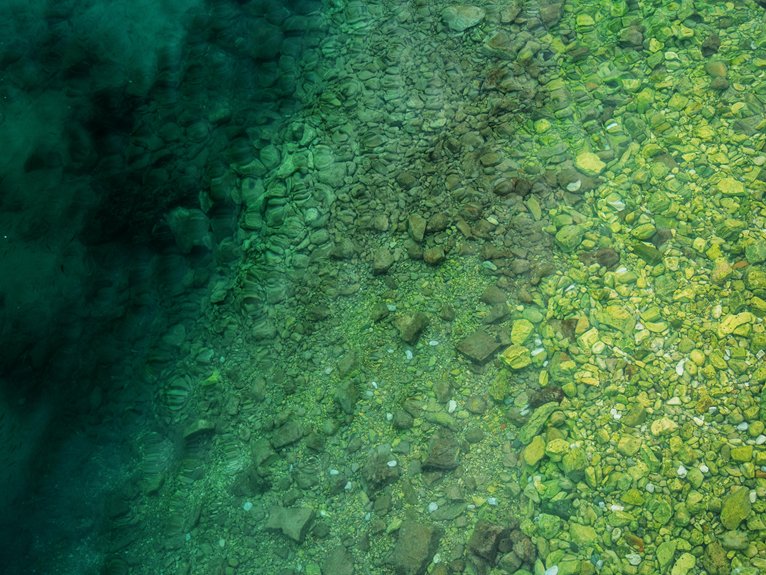
To improve water clarity in HOA lakes around Easton, PA, you should focus on reducing nutrient levels to limit algae growth and control sediment disturbance. Implement biological filtration, shoreline stabilization, and effective sediment management to minimize turbidity. Regular monitoring of water quality helps adjust strategies proactively. By addressing both algae blooms and sediment dynamics, you can enhance clarity year-round. Continued efforts in these areas will uncover more effective methods to maintain clear, healthy lakes over time.
How Do Algae Blooms and Sediment Affect Lake Clarity in Easton?
Algae blooms and sediment substantially impair lake clarity by increasing water turbidity and reducing light penetration. Excessive algae growth hampers photosynthesis, leading to dense surface scums that scatter light.
Sediment resuspension from runoff or disturbance further clouds the water. Effective algae control strategies, such as nutrient reduction, help limit bloom formation.
Sediment management techniques, including aeration and erosion control, minimize sediment disturbance and accumulation. Addressing both algae blooms and sediment disturbance is essential for improving clarity and maintaining healthy, visually appealing lake environments in Easton, especially when integrated with nutrient recycling management to reduce ongoing nutrient availability.
Key Factors Influencing Water Clarity in HOA Lakes
Several key factors directly influence water clarity in HOA lakes, including nutrient levels, sediment dynamics, and hydrological conditions. Water chemistry impacts clarity by affecting algal growth and sediment stability; elevated nutrients promote algae, reducing transparency.
Sediment resuspension from wind or inflow alters clarity, while hydrological patterns influence the distribution of particulates.
Wildlife interactions also play a role; aquatic and terrestrial species can disturb sediments or introduce organic matter, further affecting clarity.
Understanding these factors enables targeted management, as controlling nutrient input, monitoring sediment disturbance, and managing wildlife activity are essential to maintaining ideal water transparency in HOA lakes.
Practical Strategies to Improve Lake Water Quality
Implementing targeted management practices is essential for improving water quality in HOA lakes. Natural filtration methods, such as planting submerged vegetation and riparian buffers, effectively reduce sediment and nutrient loads, enhancing clarity.
Additionally, wildlife management controls overpopulation of species like geese, which contribute to nutrient overload through droppings. These strategies optimize natural filtration processes and minimize pollutant input, resulting in clearer water.
Regular monitoring guarantees these practices remain effective, allowing for adaptive management.
How to Choose the Right Water Treatment Solutions for Your Lake?
Choosing the appropriate water treatment solutions for your lake requires a systematic assessment of its specific conditions and pollution sources. You should evaluate factors like nutrient levels, sedimentation, and aquatic plant proliferation.
Effective solutions focus on nutrient reduction to limit algae growth and improve clarity. Aquatic plant management plays a vital role in controlling invasive or excessive plants that hinder water quality.
Select treatments such as aeration or biological controls based on these assessments, ensuring they target the root causes of turbidity. Precise application of these strategies will optimize clarity improvements, prevent rebound issues, and promote a balanced, healthy aquatic ecosystem.
Best Practices for Maintaining Clear Lake Waters Year-Round
Maintaining clear lake waters throughout the year requires consistent, strategic management practices that address seasonal variations in nutrient loads, sedimentation, and biological activity. Effective aquatic plant management reduces excessive vegetation that can contribute to nutrient cycling and murkiness.
Shoreline stabilization minimizes erosion, preventing sediment runoff that clouds water clarity. Implementing targeted herbicide applications, mechanical removal, and native plant buffers help control invasive species and promote a balanced ecosystem.
Regularly scheduled maintenance aligned with seasonal cycles ensures nutrient levels stay in check, sedimentation remains controlled, and biological activity supports water clarity, resulting in a stable, clear lake environment year-round.
Monitoring and Assessing Water Clarity Progress Over Time
Effective monitoring and assessment of water clarity are essential for evaluating the success of management strategies and guiding adaptive practices in HOA lakes. Regular data collection, including Secchi disk readings and turbidity measurements, allows you to track changes over time.
Incorporate aquatic plant management to reduce phytoplankton and algae growth that impair clarity.
Shoreline stabilization techniques help prevent erosion, which can introduce sediments that cloud water.
Analyzing trends from these assessments enables you to adjust interventions proactively, ensuring continuous improvement.
Precise monitoring supports data-driven decisions, fostering healthier lake ecosystems and sustained water clarity.
Conclusion
Improving water clarity in HOA lakes requires a thorough understanding of algae blooms, sediment dynamics, and key influencing factors. By implementing targeted treatment strategies, selecting appropriate solutions, and maintaining consistent monitoring, you can effectively enhance water quality. Regular assessment ensures ongoing progress and adaptation. Ultimately, a data-driven, proactive approach enables sustained clarity, supporting ecological health and aesthetic appeal in Easton’s lakes. For more information on how Clean Flo can improve the health of your lake or pond, visit us online at Clean Flo. You can also check out our video series on YouTube channel. This strategic framework fosters long-term water quality improvements through informed decision-making.