
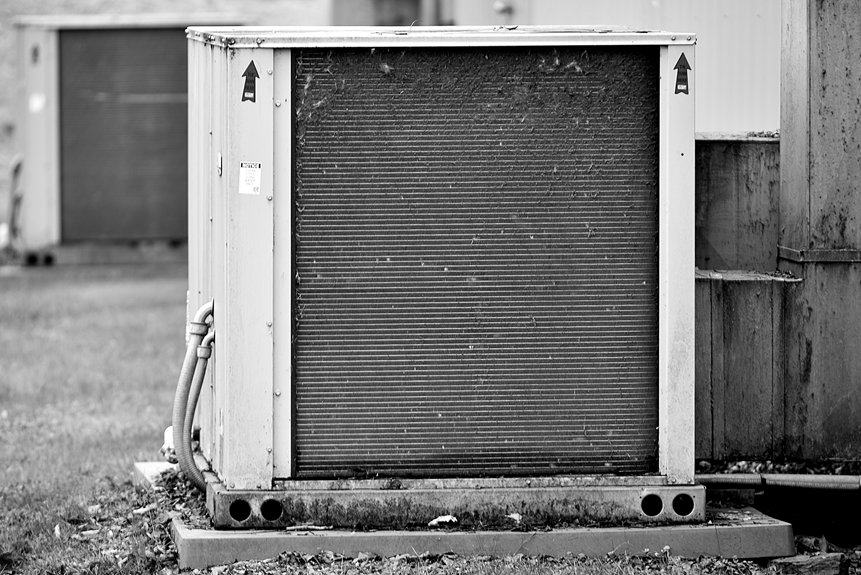
If your HVAC system is making strange noises, smelling musty or burning, or if some rooms feel too hot or cold, it’s a sign it needs service. You might also notice rising energy bills or poor airflow. Look for leaks, rust, or worn components that could cause failure. Regular maintenance can prevent costly repairs, but it’s best to act early. Keep going to discover more common signs and how to handle them effectively.
Recognizing Common Signs That Your HVAC System Is Failing
Your HVAC system will often give subtle signals when it starts to fail, so paying attention to these signs can save you from costly repairs or replacements later on. One common indicator is inconsistent temperature control, which might be caused by faulty thermostat calibration. If your home feels unevenly heated or cooled, it’s worth checking if the thermostat needs recalibration. Additionally, HVAC repairs can often be prevented with early detection of issues, saving you time and money.
Another sign is poor airflow, which can stem from dirty or clogged ducts. Duct cleanliness is essential for efficient operation, so if your system isn’t blowing as strongly as before, it could be time for a duct cleaning.
Recognizing these early signs helps you address issues promptly, ensuring your HVAC system remains reliable and energy-efficient for years to come.
Unusual Noises and Odors Indicating Trouble
Unusual noises and odors are often warning signs that your HVAC system needs attention before minor issues become major repairs.
If you hear banging, squealing, or rattling sounds, it could indicate ventilation issues or loose components inside your unit.
Strange smells, especially musty or burning odors, often point to filter problems or electrical issues.
Poor ventilation can cause odors to linger and lead to inefficient airflow, making your system work harder.
Ignoring these signs may result in more costly repairs or system failure.
Pay attention to any persistent sounds or odors, and have a professional inspect your system promptly.
Addressing these early warning signs can save you money and assure your HVAC continues to operate smoothly.
Inconsistent Temperatures and Poor Airflow Symptoms
When your HVAC system produces uneven temperatures or inconsistent airflow, it’s a clear sign that something isn’t working right. You might notice certain rooms feeling too hot or cold, or airflow that fluctuates unexpectedly.
This often points to issues like incorrect thermostat calibration, which causes your system to misjudge temperature needs, or duct sealing problems that allow air to escape.
Poor duct sealing reduces airflow efficiency, making it harder for your system to distribute conditioned air evenly.
Addressing these issues involves checking and calibrating your thermostat and sealing leaks in your ductwork.
Ignoring these symptoms can lead to decreased comfort and increased energy use, so it’s best to have a professional assess and fix the problem promptly.
Rising Energy Bills: When Your System Is Overworking
Persistent temperature inconsistencies and airflow problems often lead your HVAC system to work harder than necessary, causing your energy bills to rise. When your system runs excessively, it consumes more power without providing better comfort.
Consider energy-efficient upgrades, like high-efficiency filters or smart thermostats, to reduce strain. Proper thermostat calibration guarantees your system maintains accurate temperatures, preventing overworking.
An uncalibrated thermostat might signal your system to run longer than needed, wasting energy. Regular maintenance and upgrades improve efficiency, saving you money on utility costs.
If your bills seem unusually high, it’s a sign your HVAC is overworking, and addressing these issues promptly can extend your system’s lifespan and keep your home comfortable without skyrocketing costs.
Frequent Cycling or Short Cycles: What They Mean
Frequent cycling or short cycles happen when your HVAC system turns on and off more often than it should, which can signal underlying issues. One common cause is improper thermostat calibration, causing your system to respond prematurely or inaccurately.
Short cycling can also mean your system isn’t operating at peak efficiency, leading to increased wear and energy waste. If your unit keeps cycling on and off rapidly, it might be struggling to maintain the set temperature, indicating a need for professional inspection.
Addressing thermostat calibration issues and checking for other potential problems can improve system efficiency and extend your HVAC’s lifespan. Don’t ignore these signs, as resolving them early keeps your system running smoothly and saves you money in the long run.
Visible Signs of Wear or Leaks to Watch For
Noticing visible signs of wear or leaks can be crucial in catching HVAC issues early before they cause more extensive damage. Look for visible leaks around your system, such as water pooling near the unit or fluid drips from hoses and connections. These leaks often indicate clogged drains, damaged pipes, or refrigerant leaks that need prompt attention.
Wear signs, like rust, corrosion, or frayed wiring, are also clear indicators your system is aging or deteriorating. Cracked or broken components, especially on the exterior unit, should never be ignored.
Catching these visible signs early allows you to address problems before they develop into costly repairs or system failures. Regularly inspecting your HVAC system for leaks and wear signs can save you time and money in the long run.
The Importance of Regular HVAC Maintenance Checks
Regular HVAC maintenance checks are essential to keep your system running efficiently and prevent unexpected breakdowns. Regular inspections help verify your indoor air quality stays high by identifying dust buildup, mold, or other pollutants that can affect your health.
During maintenance, technicians calibrate your thermostat to ensure accurate temperature control, saving you energy and money. Proper thermostat calibration prevents your system from overworking or underperforming, which can lead to higher utility bills and wear on components.
Routine checks also allow early detection of issues like clogged filters or refrigerant leaks, preventing costly repairs down the line. Staying proactive with maintenance keeps your HVAC system reliable, improves air quality, and maintains a comfortable home environment year-round.
When to Call a Professional for AC or Heating Repairs
Wondering when it’s time to call a professional for your AC or heating system? If your system is making strange noises, cycling on and off frequently, or failing to reach the desired temperature, it’s a clear sign you need expert help.
Delaying repairs can lead to more extensive damage, requiring costly HVAC installation or system upgrades later on. If your system is over 10-15 years old, consider consulting a professional about replacement options to improve efficiency and reliability.
Additionally, if your repairs involve complex issues or refrigerant leaks, don’t attempt DIY fixes—trust a licensed technician. Regular maintenance checks can help identify problems early, but when issues persist, calling a professional guarantees your comfort and prevents costly breakdowns.
Conclusion
Don’t ignore these signs that your HVAC system needs attention. Addressing issues early can save you money and prevent breakdowns when you need your AC or heater the most. Regular maintenance and prompt repairs keep your system running efficiently and extend its lifespan. If you notice any of these warning signs, call a professional promptly to schedule your appointment at 972-475-1082 or visit us online at Rowlett Air. Staying proactive guarantees your home stays comfortable year-round without unexpected surprises.